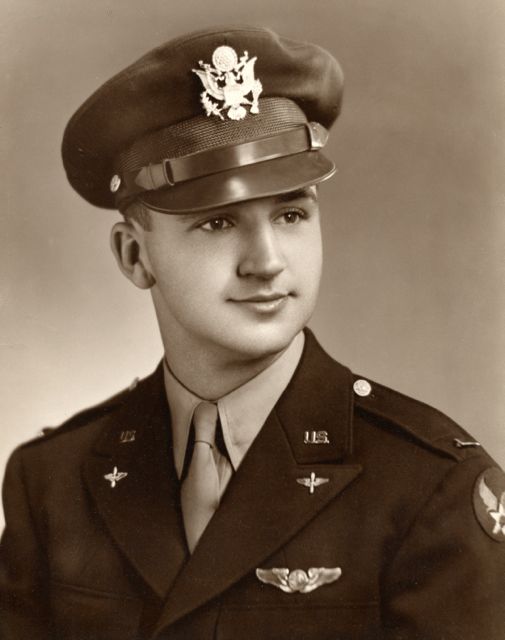
On Jan. 23, 1943, my uncle, Frank Ebner Gartz, (photo in uniform, above) reported to the draft board in Chicago to start his training for WWII. So began the correspondence between him and family & friends, comprising almost 300 letters going both ways. I’m posting many of these World War II letters, each on or near the 70th anniversary of its writing. To start with his induction, click HERE.


This blog began in Nov., 2010, when I posted a century-old love note from Josef Gärtz, my paternal grandfather, to Lisi (Elisabetha) Ebner, my paternal grandmother, and follows their bold decision to strike out for America.


My mom and dad were writers too, recording their lives in diaries and letters from the 1920s-the 1990s. Historical, sweet, joyful, and sad, all that life promises-- and takes away--are recorded here as it happened. It's an ongoing saga of the 20th century. To start at the very beginning, please click HERE.

Showing posts with label 1914. Show all posts

Monday, May 28, 2012

Facing Death-A Memorial Day Tribute

Lt. Frank Ebner Gartz DOB 1924
This Memorial Day, I'm remembering two relatives who each served in one of the two world wars.

World War II
My dad's younger brother, Frank Ebner Gartz, was a navigator in the last year of  World War II. He trained stateside from January, 1943 through December, 1944. On Christmas day, 1944, he and crew of young men flew to Italy via North Africa to fly missions as members of the Second Bomb Group stationed at Amendola Air Base, near Foggia, Italy, on the Adriatic Coast. 


Frank Gartz and his crew. Frank standing 2nd from left.
Frank flew twenty-five missions. One of my  favorite quotes from his letters was advice he gave to  his bombardier, whose actual last name was Booms (did a name define his  destiny?). The bombardier and navigator sat in the half-spherical Plexiglas nose of the B-17, able to see clearly all the enemy flak zooming toward them. Frank wrote my grandfather after a particularly harrowing mission in March, 1945:


Today I flew my 10th mission, and it was the hottest thing I have seen so far. There was more and bigger flak. We bombed an oil refinery in North Eastern Vienna and those people don’t like us to drop our presents to them. 


B-17s flying in formation; photo taken by
Frank Ebner Gartz (see below for permission
to use photos from this blog).

Lt. Booms, my bombardier, had a rough time. He said that they threw everything they had at us including their kitchen sinks. Booms has to sit up in that Plexiglas nose where he can see all that stuff exploding around him. It sort of gets on his nerves. I was trying to explain to him that when your time comes it doesn’t matter where you are…your number is up, and that’s all there is to it.


Such was the fatalism of a twenty-one year old who faced death every time he took off on a mission. 

World War I

My grandmother's brother, Samuel Ebner, was also twenty-one when he was sent off to fight in the Battle of Galicia in August, 1914, one of the first battles of the war. I have no photo of him, only this last postcard he wrote on August 19, 1914, just eight days before being killed. He wrote:
Dear Parents,

I share with you that we are now in Galicia. Most beautiful greetings to all. Farewell.

War Memorial to "The Fallen"
Grosspold, Romania
Photo by Ulrich Wien
Kaspar Ebner 
(apparently a nickname since his father was also named Samuel)

My grandfather, twenty-one when he came to America, missed fighting, and likely dying, in this awful war, as I wrote about in my last post, An odd fellow.


To read more about Sam and the memorial that stands in honor of him and his fellow soldiers from Grosspold, Romania, lost during that tragic war, see The Fallen-Part I, The Fallen-Part II, and The Fallen-Part III. Part III reprints the letter my grandmother kept, that reveals how she and my grandfather, 5000 miles distant from their homeland, helped make the memorial possible.

So today, I thank all of our men and women serving so far from home for their service, bravery, and commitment in our own tragic war. I wish them safely returned into their families' arms again.

Please, if you would like to use any of the photos on this 
blog, you must ask permission, credit the photographer, and provide a link back to the site. 

Tuesday, May 22, 2012

An odd fellow-missing World War I

World War I trench warfare
photo credit: www.anunews.net/blog
Last week’s photos pictured Josef and Lisi Gartz, with their two young sons, Friedrich and Wilhelm happy and healthy in Chicago about early 1916 (see below) and again in the summer of 1918. (See Family and Dead Dog).


These family photos were taken at the same time that Europe was engulfed in the nightmare of World War I, and most young men of Josef's age (25 in 1914)  would have been covered in lice, crouching and rotting in some trench, being blown up or blowing up other young men. 


My grandmother’s brother, Samuel, was one of those young men (See The Fallen-Part I).
Gartz Family ~ 1915-1916
L-R Lisi, Will, Fred, Josef
Let’s jump back four-six years before these family photos were taken, 100 years ago, to the spring of 1912. Josef and Lisi had married five months earlier and were both working seven days a week, Josef for fourteen hours a day, Lisi for twelve hours a day. They were barely getting by, but they had jobs.


Military Draft Notice, Josef Gartz
Austro-Hungary
Josef most certainly could have been among the dead had he stayed in Siebenbürgen (Transylvania). (See Drafted 100 Years Ago, where Josef's draft notice is translated to English).


But the first year after Lisi and Josef had married in Chicago, my grandmother’s former employer, Mrs. Jickeli, saw only youthful indiscretion in their decision to emigrate to America. Two months after Lisi and Josef married in Chicago on October 13, 1911, Mrs. Jickeli had written Lisi Ebner a letter expressing her dismay at Lisi's hasty departure to join her love, Josef Gärtz. She had chastised them both for their impetuous behavior and a host of issues, even declaring their marriage wouldn't be  considered valid in their homeland Siebenbürgen (because it hadn't been announced in the church).

She reiterated her concerns in a second letter, three months later, in what today we might say was “beating a dead horse," even if a stick of a slightly different length!

Merchant's wife, Berta Jickeli
born Henriette Albertine Krasser
March 15, 1912 

My Dear Lisi, 

Are you satisfied with your home (apartment)? Have you been employed long and how does Gärtz like the cooking spoon? [Josef was working in a restaurant when Lisi arrived]. That you live in peace makes me happy. I have certainly never doubted that Gärtz seems like a good man (Mensch). I have always considered him to be a good and respectable/honest/decent man, but a bit of an odd fellow.
 
But you also know that I am too old and have seen too much of life to scream “Hurrah!” A happy marriage is very rare in life and to be sure, even more rare because no one holds his fate strictly in one’s own hands and no one knows what tomorrow brings. Besides that, marriage seems different after 10-20 years than in the first year. That you will experience, just as everyone has. For you and Gärtz it’s just that you went into your marriage so fast and with such impatience. 
You will have to go through double the work and sacrifice and homesickness than you would have endured if you had waited one more year. Even our Lord God cannot reverse your fate. First Gärtz will have to comply with his military duty if nothing changes. Without you coming here, for the time, then the second thing that has to be is that your marriage must also be declared binding here. This is the only way a later happiness can bloom.

Mrs. Jickeli ends her letter with a few paragraphs of local news and heartfelt wishes, for after all, she was like a second mother to Lisi, and sincerely worried for her. 

And now, dear Lisi, I wish you both very well, and don't grow tired before you again have a strong foundation under your feet. We all greet you both from our hearts, and I remain for all time––Your old mother
Berta Jickeli


Berta Jickeli was right in one regard: people certainly don't have complete control over their fates, as all those who've been caught in war know so well. Yet Josef had influenced his fate, and the fate of his family, through his determination to get to America. The letters make it clear that friends and relatives back in Siebenbürgen/Transylvania expected he and Lisi would return. They didn't know Josef very well.

So when another serious problem emerged back in Transylvania after Josef left for America, his swift decision to leave his countryland again appeared to those back home to have been foolhardy. Apparently some local person had taken advantage of Josef’s departure, perhaps in cahoots with a local official, and co-opted from Josef his home and land. Both Lisi's father and Mrs. Jickeli weighed in on what had happened. Coming up next time at Family Archaeologist.

Tuesday, April 24, 2012

Divorce, Citizenship, Birth, and Death - 1914

John Koroschetz Date uncertain
John Koroschetz, my mom's father, received his Certificate of Naturalization on November 6, 1914 (below). John had divorced his Austrian wife, named as Carolina,  four months earlier. Yet this certificate still notes he has as wife, but with a different name, Charlotte: 


Name and residence of wife: Charlotte resides in Austria


...and reading this document is the first time I learn the names and ages of my maternal grandfather's first children, my mother's half siblings, and therefore, my half aunts and uncles.

Names, ages and places of residency of minor children: [in 1914] Charlotte, 16 yrs. John 14 yrs. Mary 9 yrs. Bertha 9 yrs twins) all reside with mother in Austria. 
All are certainly long dead, and even their children, my half first cousins, are probably dead, or very old.

Some questions arise out of this document:

1. Why is Charlotte/Carolina still listed as his wife, even though he finalized his divorce from her in July?  Is it because it would have been unseemly to list children without a wife?

2. Carolina or Charlotte? The fact that the eldest daughter is named Charlotte leads me to believe this is the correct name. Did the bureaucrats just write down any name starting with a "C" or perhaps they couldn't read John's handwriting? Is it possible John purposely gave two different names? That seems far-fetched as he wanted to become a citizen and wouldn't want to jeopardize that process, but who knows?

3,  Did Charlotte desert John and then run away with another man in Austria, perhaps to marry him? If she had deserted John Koroschetz in 1908, (before he left for America), as he claimed in the divorce decree, she was caring for a ten-year-old, eight-year-old, and twin three-year olds at that time. A woman with four young children at the turn of the twentieth century didn't have a great many options for making a living, especially with four children in tow. She would have needed a man to survive.


4.  Did Charlotte file for divorce in Austria, claiming John had deserted her? One day I hope to search out more information about these half-siblings of my mother, of whom she never spoke until very late in life and in whom she expressed no interest. Zero.

Birth-Fred Gartz, October 10, 1914
The Year 1914 turned out to be significant in other ways for my family. Just a month prior to Grandpa Koroschetz's naturalization, a baby was born who would eventually marry John's yet-to-be-born American daughter, my mother, Lillian. My Dad, Fred Gartz,  was born October 10, 1914. See Happy Birthday Dad and GGG Grandpa)  

But the joy of that birth was tempered by a death. By the time John became a naturalized citizen, World War I had been waging since the first official battle in July, 1914. My Dad's mother, Lisi's younger brother, Samuel Ebner, had been killed in The Battle of Galizia (see The Fallen, Part I) in August, 1914, at the age of twenty. It wouldn't be the last time in my family's history that the grief of death and the happiness of birth co-mingled.

Next week, John Koroschetz and Louise Woschkeruscha find each other and marry, almost two years after John's divorce.

Tuesday, April 17, 2012

Desertion and Divorce

Austrian Clothing
John Koroschetz,
probably Chicago
Tool & Die Maker Business Card: John Koroschetz
After arriving at Ellis Island in 1908, and living for a time in Buffalo, NY, John Koroschetz eventually made his way to Chicago. I know very little of what he did in the six years between 1908 and 1914, but I presume he worked as a machinist or tool and die maker. Here's one of his business cards, but I'm not sure of the year. 

In 1914, he made two life-changing decisions: In April he took the first steps to obtain a divorce from his wife who still resided in Austria. 

Divorce document-John vs. Carolina Koroschetz
This page of the divorce decree states that John published, in a newspaper, his intention to file for divorce, as is required by law. He published on April 2 and April 23, 1914. I'm not sure where he published, perhaps in Chicago, perhaps in an Austrian paper, though the latter is unlikely. The idea is that the party being sued for divorce, the defendant, in this case, John's wife, Carolina, is made aware of the lawsuit.

On July 8th his petition for divorce was presented in court, and the divorce was finalized on July 10, 1914. 

Divorce petition detail: Possible reasons for divorce
The reason for the divorce can be seen in the middle of this page. It notes Carolina and John were "lawfully joined in marriage on June 21, 1896, in Schwechat, Austria, about 5 miles southeast of Vienna. 

In the detail above, you can see that printed right on the form, are several possible reasons for divorce (perhaps these were the only valid reasons at the time). Each INAPPLICABLE reason is crossed out (see above).

"The defendant [Carolina Koroschetz] 
...has committed adultery (Nope-CROSSED OUT)

...has been guilty of extreme and repeated cruelty toward the complainant (CROSSED OUT)

...Has been guilty of habitual drunkenness for the space of two successive years prior to the filing of the bill in this cause (NO-CROSSED OUT

has willfully deserted, and absented herself from the complainant without any reasonable cause for the space of over two years immediately prior to the filing of the bill in this cause. THIS IS THE ONE. 


John left for America in 1908. Had his wife deserted him before he left, taking all their children with her, and who were those children? They're not mentioned in the divorce decree.


Nothing is impossible, but I find it hard to believe that John would have been the one to do the deserting. I know my mother adored her father, and he was completely devoted to her, dropping everything to rescue her when her car broke down, crying when she brought home her perfect report cards. I find it difficult to believe that a man who showed such loyalty to the daughter of his second marriage would have abandoned his four children from his first marriage.

A bold and stern warning is written on the back of the page shown above, in bright red type so you can't miss it.

REMARRIAGE FORBIDDEN

For John this meant that for one year after his divorce was approved, he was not allowed to remarry. If he did he risked:

"IMPRISONMENT IN THE PENITENTIARY FOR NOT LESS THAN ONE YEAR, NOR MORE THAN THREE YEARS, and said marriage shall be held ABSOLUTELY VOID." 

My guess is that John didn't yet know my grandmother, Louise, or at least had no plans to marry her at the time of this decree. Otherwise they would have married as soon as the required year had passed.

Four months after the divorce, in November of 1914, John Koroschetz took another life-changing step: he applied for U.S. citizenship, and on his naturalization form, we learned the names and ages of his Austrian children––and a different possible name for his first wife.